CONFESSIONS OF BUSINESS LAZARUS #20:Echoes from My Entrepreneurial Graveyard: The Rise and Fall of Stingomania Records
Backstory:
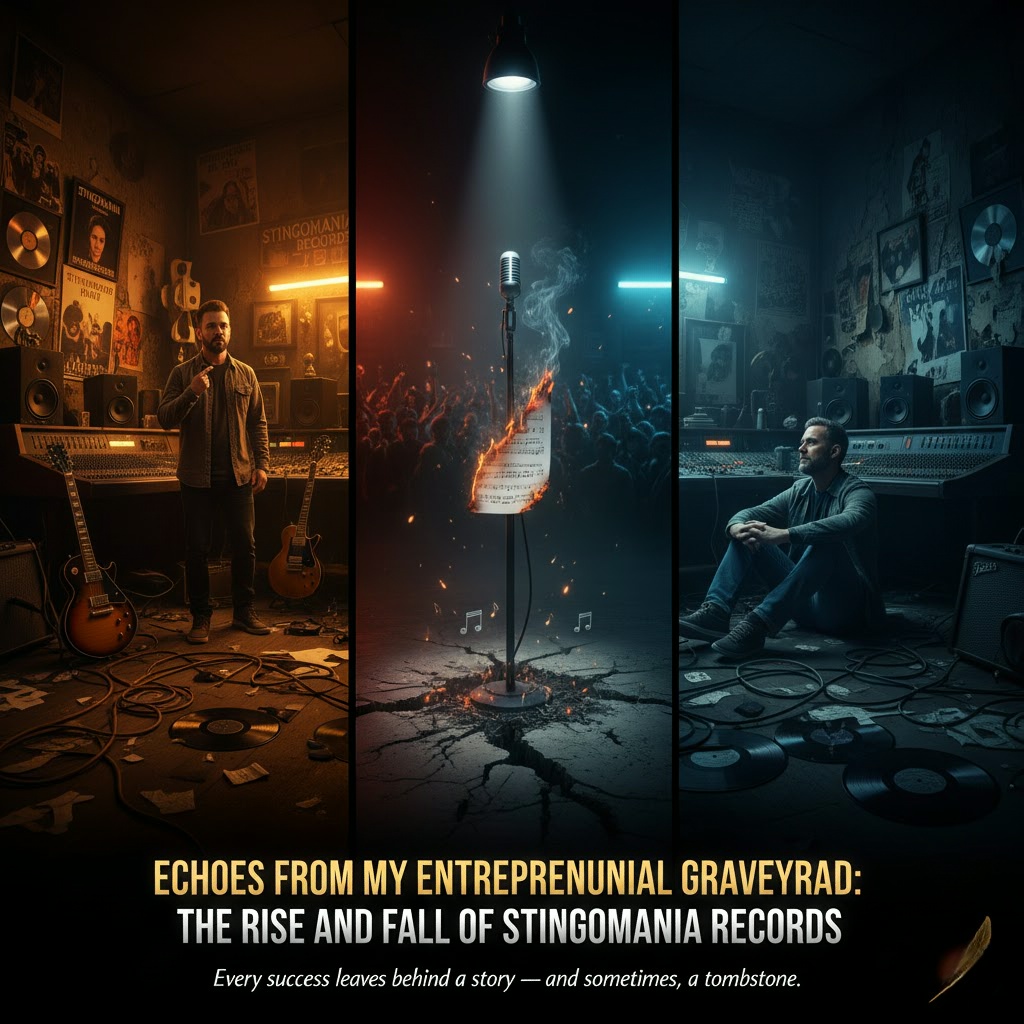
Years ago, I owned a record label and entertainment company called Stingomania Records. It was born out of passion and ambition, but ultimately, it became one of my most expensive business lessons. Here’s what happened—and what I now know that I wish I had understood from day one.
🚫 The #1 Lesson I Learned: Be Clear About Your Profit Sources Before You Invest
When I launched Stingomania Records, I had the dream, the energy, and the drive. I even had a business plan.
But what I didn’t have was clarity about where the actual money would come from.
I knew I wanted to work with artists. I wanted to create music, organize shows, and build an entertainment empire. But my plan lacked detailed revenue strategies—especially on how each artist would bring in profit.
Instead of building clear income models, I focused on signing multiple artists, hoping one would strike gold with a hit album. I didn’t realize at the time that hope is not a business model.
💸 I Invested Heavily—Without a Clear Return Path
I poured millions into supporting these artists. Literally.
- I paid for recording sessions
- I hired full-time producers
- I covered living expenses, clothing, phones, even food
- Some artists lived in my house
They were enjoying the perks, and I was burning through capital—₦60–70 million, or roughly $200,000 at the time.
But the profits? They were nowhere to be found.
🎤 I Tried to Pivot—But It Was Too Late
Eventually, I started organizing small paid events to generate revenue. I invited my artists to perform and contribute. But because I hadn’t set these expectations early on, many of them felt exploited. They misunderstood my intentions.
They didn’t see the business side.
They saw free shows.
They thought I was cashing in while they worked for nothing.
Some artists even began hiding private gigs from the label, performing for side income while the company bore all the costs.
The truth?
I had failed to set the tone and terms from the beginning. And by the time I tried to correct it, the damage was done.
🧠 What I Should’ve Done Differently
Looking back, it’s painfully obvious.
I should’ve:
- Created individual business plans for each artist
- Defined realistic income expectations for the early years
- Communicated clearly that until major sales came, they’d need to help sustain the business through shows and other revenue-generating activities
- Gotten everyone’s buy-in upfront on what it would take to survive and grow
💥 The Collapse
We were this close to signing a major new artist. But the bank account couldn’t take it anymore.
The business fell apart—not because of lack of talent, or even lack of opportunity—but because of a missing ingredient: profit clarity.
🔁 How It Changed My Approach Forever
Today, everything is different.
Before I sign any artist or take on a new venture, I ask the one question I didn’t back then:
“How exactly will this make money?”
And I don’t stop at general answers like “record sales” or “shows.” I want a concrete plan that shows how revenue will flow—especially in the early days when cash is tight and big wins are uncertain.
💡 Key Takeaway for Creators & Entrepreneurs
If you’re starting anything—whether it’s a record label, a fashion brand, a YouTube channel, or a startup—don’t just chase the dream.
Ask yourself:
- Where will the money come from?
- When will it come?
- What will I do if it doesn’t?
Your passion is the engine.
But your profit strategy is the fuel.
🪦 Rest in Peace, Stingomania Records
And thank you for the tuition I didn’t know I was paying.